|
History of Berwick Landowners

THE LANDOWNERS
OF BERWICK.
In the history of various houses on this website, I
frequently refer to the Landowners, and so I thought I would do a little on the
land ownership.
This first part is a brief history and is little more than a
list of dates and names!
There is more on some of these landowners below.
It has all been researched, from many sources, and written
by Nicky Street,
and I apologise in advance if I have made any mistakes.
A BRIEF HISTORY of BERWICK from SAXON times to TODAY.
Edric the Saxon owned Berwick before 1066.
After 1066 all land is owned by the King, and he then grants
it to who he chooses.
1086 (Domesday) Nubold had Berwick, from Ernulf of Hesdin
(who held it of King William I).
Patrick of Chaworth held it as part of the Barony of
Kempsford in Gloucestershire. Berwick, along with thousands of other acres,
continued in the Chaworth family until 1307.
In 1307 Berwick was given in a marriage settlement of 1307
to Henry of Lancaster, and then via the female line to Blanche wife of John of
Gaunt Duke of Lancaster. As part of the Duchy of Lancaster on the accession of
Henry IV (John of Gaunt’s son) to the throne of England, it became part of The
Crown lands. Some notice does seem to have been taken by the villagers that
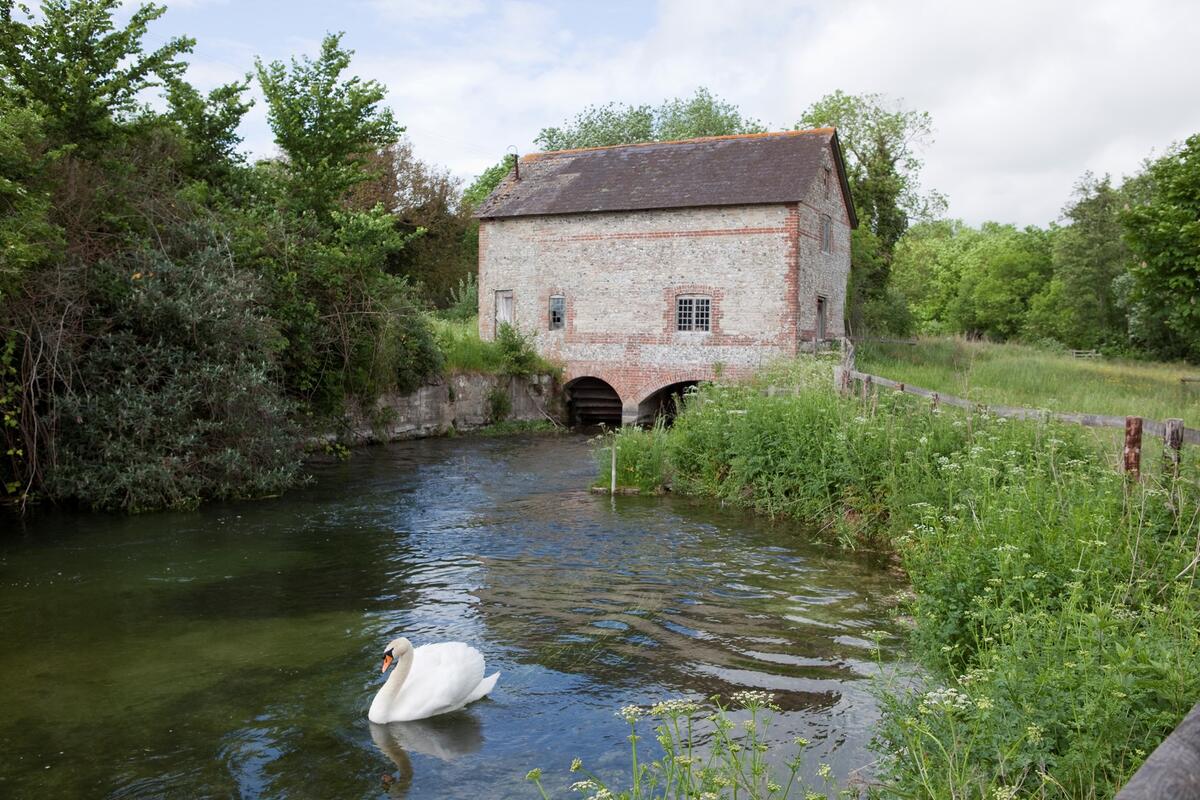
they were owned by the Monarch, for the mill was called “The Queen’s Mill” in
1478.
Around 1600 Adam Snow became the land owner, then Berwick
was inherited by Catherine Crawford (nee Snow) who left it to Mary Wake (nee
Crawford), then to William Wake in 1740, who sold it to James Harris in 1742
(he became Lord Malmesbury). The Harris family were very active and made a
particularly useful survey of the village and lands!
In 1815 Berwick was sold to Alexander Baring (Lord
Ashburton), in 1896 to Mr Ernest T Hooley, in 1898 to Sir Christopher Furness.
Up to this point none of the landowners lived in the village, or even very
close. Many of them are unlikely to known anything about Berwick, and, probably
cared less, judging by the way Berwick was passed about in Marriage Settlements,
and to daughters etc.
This changed with Stephen Furness who lived in Berwick, in
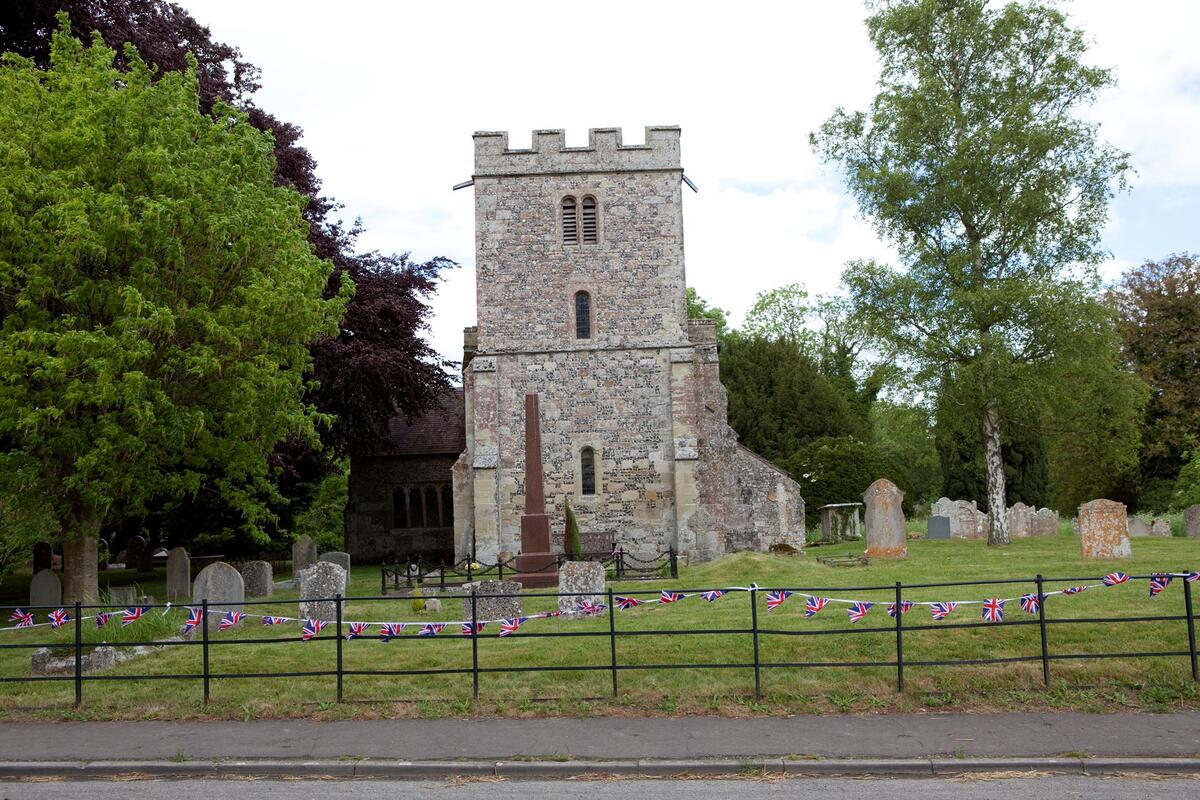
what is now Berwick House. He and many of his family are buried in Berwick
churchyard.
In 1915 it was bought by Mary wife of Sir Cecil Chubb (who
gave Stonehenge to the nation), it was acquired by the Board of Agriculture and
Fisheries in 1919 and sold to Mr E Collins in 1921. In 1945 Mr F Bucknell
bought it, and in 1954 sold half to Mr
G Street.
The remaining Bucknell part was sold to the Guinness estates (which, by
then, included Druids Lodge) in 1995.
CHEDWORTH part of Berwick.
This is the history of the main part of Berwick parish, not
including Asserton.
There was about 300 acres and a very few houses (in 1807
there were four) which separated from the main part in 1127. Patrick de
Chaworth granted this part (called Bonhams) to Henry Daubeney along with Great
Wishford, and this farm then followed the landowning history of Great Wishford.
In 1302 to the Bonham family, sold in 1598 to Sir Richard Grobham, descending
to John Howe (Lord Chedworth). In 1807 Lord Chedworth’s executors sold it to
James Harris Lord Malmesbury, reuniting it with the rest of Berwick. The case
of John Howe’s will went to The Court of Chancery (as in Bleak House) as the Chedworth
family disagreed with the will. Although the case was upheld, the lands all had
to be sold to pay the debts caused!
JAMES HARRIS
senior, and JAMES HARRIS, Lord Malmesbury.
James Harris
bought Berwick, along with other estates, in 1742 from William Wake whose wife
Mary nee Crawford had inherited Berwick.
James Harris was born in Salisbury
in July 1707, he was educated at Bishop Wordsworth’s school and at Oxford. He inherited
“independent means” and a house in the Close from his father in 1733. He was a
Magistrate and MP (for Christchurch)
and studied and wrote about classics and grammar. He died in 1780.
His son, also called James
Harris, who was later The 1st Earl of Malmesbury, was born on
April 21st 1746 in Salisbury.
He was educated at Winchester and Oxford. Whilst he was
serving as a diplomat in Madrid he discovered
a plot by the Spanish to attack the Falkland Islands and was rewarded by being
appointed minister in Madrid.
He rose to being minister to the Court of Prussia in 1772, and in 1777 was
further promoted to the Court of Russia where he got on well with the
notoriously difficult Catherine the Great. He inherited his father’s estates in
1780, which included Berwick.
He continued to serve elsewhere in Europe
with great success and was created Baron Malmesbury in September 1788. Amongst
other things, in 1794 he was sent to Brunswick
to meet the Princess Caroline for the Prince of Wales, to marry her as proxy
and bring her to her husband in England.
He gave up diplomacy in 1797 and was created Earl of Malmesbury in 1800 and
lived at Heron Court
in Hampshire. He was frequently consulted on foreign policy by successive
foreign ministers particularly by Mr Cannings and Lord Palmerston.
He bought the approximately 300 acres in Berwick he did not
already own, from Lord Chedworth in 1808.
He died on November 21st 1820, having sold
Berwick and other estates to Alexander Baring Lord Ashburton in 1815.
ALEXANDER
BARING LORD ASHBURTON.
Alexander Baring,
created 1st Baron Ashburton in 1835, bought the bulk of Stapleford,
Winterbourne Stoke and Steeple Langford (but not Little Langford, Hanging
Langford, Bathampton, or Great Wishford) from the estate of the late Lord
Chedworth in 1808.
At the same sale James Harris, Lord Malmesbury bought Lord
Chedworth’s farm in Berwick. Lord Malmesbury owned the rest of Berwick at that
time.
Alexander Baring had to wait until 1815 until he was able to
buy Berwick from Lord Malmesbury, thus linking together the lands he owned
locally.
Alexander Baring, then Lord Ashburton, died in 1848. With
the barony Berwick (and Stapleford, Stoke etc) passed to his son William (died without male issue in
1864), and then William’s brother Francis
(died 1868) to Francis’ son Alexander
(died 1889) and to Alexander’s son Francis
the 5th Baron Ashburton, who sold Berwick (and Stapleford, Stoke
etc) in 1896 to Mr Ernest Terah Hooley.
Alexander Baring
was born on 27th October 1773, the second son of Sir Francis Baring,
merchant and banker. He was sent to work with Hope and Co Bankers in Amsterdam and London.
He was sent to the United
States of America for various land deals
(see below!) from 1796 to 1801, where he married Anne Louisa, daughter of
William Bingham of Philadephia on 23rd August 1798. Alexander Baring became a partner in Barings
in 1804 with his brothers and father. He continued as a financer and in 1813 he
bought Hope and Co merchant banks, combining it with Baring Brothers Bank.
In 1802 the Barings Bank and Hope and Co arranged the
finance for the Louisiana Purchase. At that
time France owned Louisiana, and Napoleon sold it to the US to help finance his war against Britain. Technically the United
States did not purchase Louisiana from Napoleon. Louisiana
was purchased by the US
from Baring Brothers and Hope & Co. The payment for the purchase was made
in US bonds, which Napoleon sold to Barings at a discount of 87 ½ per each
$100. As a result Napoleon received only $8,831,250 in cash for Louisiana. Alexander
Baring did much of the negotiating over the price himself, conferred with the
French Director of the Public Treasury Francois Barbe-Marbois in Paris, went to the United
States to pick up the bonds and took them to France.
All this whilst Britain was
at war with France!
Alexander Baring 1st Baron Ashburton effectively
retired from Barings Bank in 1825 aged only 52, and concentrated on politics.
He was MP for Taunton, then for Callington, then
for Thetford and finally for North Essex. He
was President of the Board of Trade and Master of the Mint in Robert Peel’s
government, and on the latter’s retirement was created Baron Ashburton on April
10th 1835. He continued his
links with the USA, and was
sent to America
in 1842 by the British Government and negotiated the Webster Ashburton Treaty
which settled the disputed position of the US Canadian border, the extradition
of certain criminals and work on the suppression of the Slave Trade. He had
nine children and died in May 1848. He lived at The Grange Northington Hants,
and invested heavily in land and by the time of his death in 1848 his estates
stretched across Hampshire, the Isle of Wight, Herefordshire, Somerset,
Wiltshire, Suffolk and Norfolk. His London home was Bath House Piccadilly. He
died on 12th May 1848 at Longleat House, the home of his daughter
the Marchioness of Bath.
And, before you ask, yes this is the same Barings Bank that
collapsed in 1995 after one trader, Nick Leeson, lost $1.4 billion in
speculation mainly on futures contracts!
LORDS
ASHBURTON.
When Alexander Baring died in 1848 his estates were inherited
by his son.
It is quite likely that none of the Lords Ashburton ever
visited any of our villages, as they appear to have lived mainly in London, and had little to
do with this area. I could, of course, be wrong about this, and they may have
known the area well – but I can find no evidence of that!
William Bingham
Baring 2nd Baron Ashburton was Alexander Baring’s oldest son. He
was born in 1799, married Lady Harriet Montagu in 1823. She died in 1857, and
in 1858 William married Louisa Stewart-McKenzie. He was MP for Thetford,
then MP for Callington with his father,
then for Winchester, then for North
Staffordshire, and then back to Thetford (1841-1848). He was
Secretary to the Board of Control from 1841 to 1845 and Paymaster General from
1845 to 1846. He became 2nd Lord Ashburton on his father’s death in
1848. He died 23rd March 1864.
Francis Baring 3rd
Baron Ashburton was the 2nd son of Alexander Baring and was born in
1800, he married Hortense Maret whose father was Hugues Maret Duc de Bassano,
who had been a minister to Napoleon 1. Francis was MP for Thetford from 1848
(when his brother succeeded to the title of Baron Ashburton and had to leave
the House of Commons.) He became Baron Ashburton in 1864 as his brother William
only had a daughter! He died in September 1868.
Alexander Hugh Baring
4th Baron Ashburton was born on 4th May 1835. He married
Hon Leonora Digby in 1864, and succeeded to the title in September 1868 on the
death of his father. He had been MP for Thetford (1857 to 1867) – as had his
grandfather, uncle and father before him.
Francis Denzil Baring
5th Baron Ashburton was born 20th July 1866 and died 27th
March 1938. He married Hon Mabel Hood, and later Frances Donnelly. I haven’t
managed to find out much about him, except that he was a Major in the Hampshire
Yeomanry and Deputy Lieutenant of Hampshire. He sold Berwick (Stapleford, Stoke
etc) to Mr E T Hooley in 1896. The sale price was supposed to be £50,000 but Mr
Hooley is reputed to have given Lord Ashburton £68,000 worth of Dunlop shares.
Mr ERNEST TERAH
HOOLEY
Mr Ernest Terah Hooley
owned Berwick for barely two years between 1896 and 1898, but his story
is a fascinating one.
Ernest Terah Hooley
was born in 1856, the son of a Nottingham Lace Manufacturer. He became a
stockbroker and a company promoter. He was supposed to have been a master of
persuasion and publicity although his methods quickly degenerated into
duplicity and fraud. In his promotion of companies on the stock market he
routinely published prospectuses and advertisements which made exaggerated
claims, and bribed journalists to give favourable reviews. The shares of these
companies rocketed, he sold his shares and the companies could not meet his
promises of dividends etc and many collapsed – some very famous companies barely
survived his “promotion” for example Dunlop, Schweppes, Bovril etc.
Before his inevitable downfall he was very popular – even
having a verse in a musical ballad.
“He walks into the Stock Exchange, and everybody there
Cries “Look out! Here comes Hooley, the famous millionaire!”
He can buy a share for tuppence and sell it for a pound
When he’s bought St Pauls Cathedral, he’ll buy the
Underground”
However, in 1898 he was declared bankrupt, and although he
transferred most of his assets to his wife, he had to sell his Wiltshire
Estates including Berwick.
He carried on with various schemes, many fraudulent, for 40
years. He went bankrupt again in 1911, 1921 and 1939, and served short jail
sentences for fraud in 1912 and 1922.
However he finished up, he did a great deal for Berwick in
the short time he owned it. He put in the pavement, which used to end just by
the Reading Room and that was supposed to be as far as it had been built when
he went bankrupt, and he improved every house and cottage, giving roses to many of the cottages.
As was said in the order of bankruptcy sale …
“The Estates were purchased from Lord Ashburton some 2 years
ago and immediately upon taking possession he gave an eminent architect a free
hand to put the villages Farm Houses and buildings into complete repair. This
was done …
.. no more perfect illustration could be found in the Village of Berwick St James
with its picturesque fine farm house – particularly suitable for the occupation
of a gentleman desirous of combining Agriculture with Sport – the quaint old
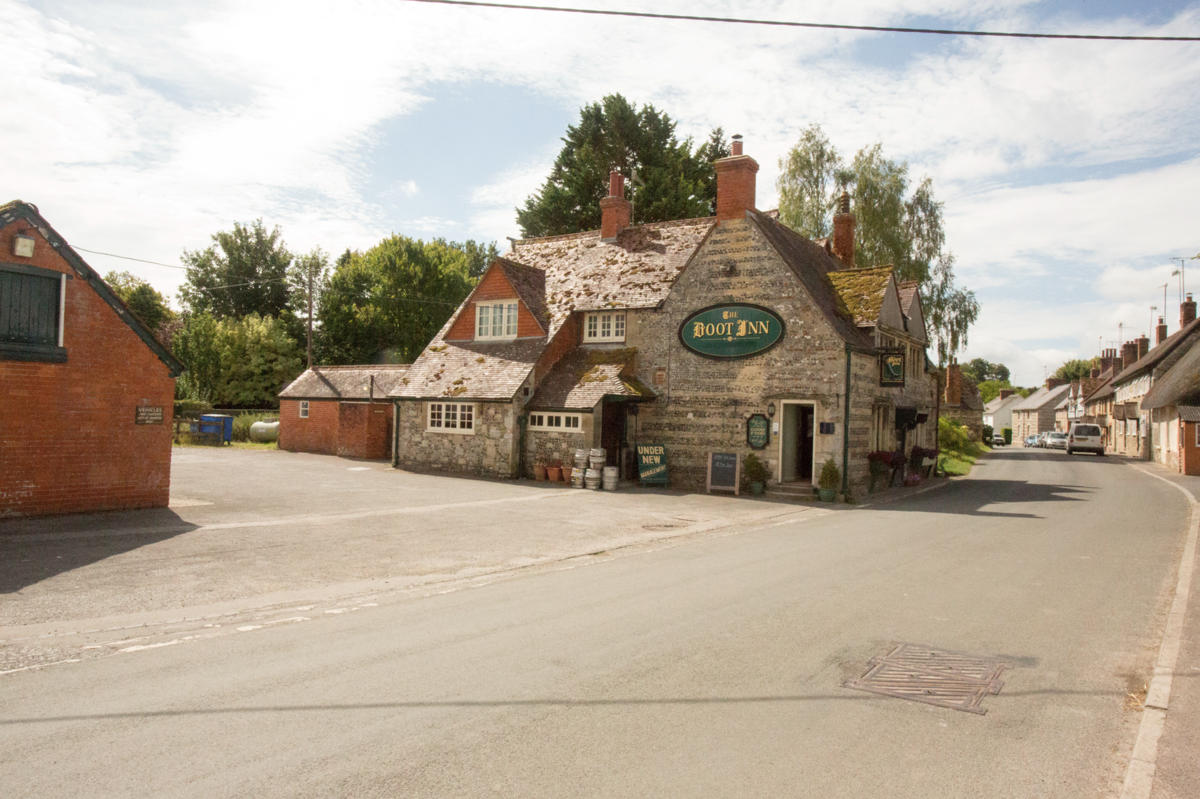
Church, clean street with paved footway fringed with cottage, the Village Inn,
School House and Farm
Buildings.” The Farm
House is now Berwick House.
SIR CHRISTOPHER
FURNESS
Sir Christopher had bought the 10,913 acre Hooley estate in
1898 (including Berwick Stapleford and Winterbourne Stoke) and sold all except
Berwick in 1909.
Sir Christopher
Furness was born on 23rd April 1852 in West
Hartlepool. He was the 7th son of John and Averill
Furness who ran a grocery and provisioning business which developed into one of
the largest in the North East of England.
Sir Christopher joined the family firm and in 1870 went to Sweden
as a buyer. During the blockade of the Elbe by
the French fleet, he secured a corner of the grain market and made £50,000 -
£60,000 profit for the firm. The firm won large provisioning contracts
importing foodstuffs from USA
and Europe as Sir Christopher developed the
shipping side and in 1877 bought sailing vessels.
The firm was divided between the eldest brother Thomas and
the youngest Christopher in 1882. Sir Christopher ran the shipping firm of
transatlantic liners and tramping vessels. In 1891 he combined with the West
Hartlepool Shipbuilding firm of Edward Withy and Co and calling it Furness
Withy and Co. Sir Christopher also acquired interests in numerous steel,
engineering coal and shipbuilding companies, as well as expanding the shipping
side including the Argentinian frozen meat trade. By 1914 Furness group
controlled over 1 million gross tons of shipping, Sir Christopher’s personal
yacht Emerald was the first turbine-powered vessel to cross the Atlantic, and
he built Britain’s
first motor ship “Eavestone”.
Sir Christopher was elected Liberal MP for Hartlepool
in 1891, again in 1900 and 1906. He was knighted in 1895, and made Baron
Furness of Grantley in 1910. I have a wonderful photograph showing a stout,
round faced man with a large moustache and mutton chop whiskers. He apparently
had a short temper, especially with those who prevaricated! He married Jane
Suggitt in 1876, died on 10th November 1912 leaving his property to
his only son Marmaduke.
His nephew Sir Stephen Wilson Furness (son of Stephen
Furness who lived in Berwick House) became chairman of Furness Withy and Co on
Sir Christopher’s death.
SIR CHRISTOPHER FURNESS and the 1909 sale.
In 1898 Sir
Christopher Furness bought the 10913 acre Wiltshire estate. According to the
Daily Telegraph it cost him £98,000.
Sir Christopher Furness lived in West Hartlepool, and was
M P for Hartlepool in 1891-95, and 1900-10. He
was a shipowner and shipbuilder, head of Furness Withy and Co, and the
"Furness Line" of steamers.
Having
owned all this land, and the villages for eleven years in February 1909 Sir
Christopher Furness sold most of the Estate to the Cavendish Land Company Ltd,
(I think he was a director of the company – more research needed!) who then
sold most of it again.
However
Berwick House, the village and the farm were retained for Mr Stephen Furness,
Sir Christopher Furness’s brother, who actually lived in Berwick House. The
fine marble memorial on the left wall of the Chancel of Berwick Church is to
Stephen Furness who died in 1911, his wife, his son and daughter.
On Tuesday
and Wednesday the 21st and 22nd September 1909 at The
White Hart in Salisbury by the Auctioneers Messrs Knight, Frank and Rutley of
London with Messrs Waters and Rawlence
of Salisbury, the southern part of the Estates were put up for Auction. (The
parts around Devizes were auctioned on the Thursday, in Devizes).
It included
the villages of Steeple Langford , Winterbourne Stoke, Stapleford, All Cannings
and Maddington with their 16 farms, 3 inns, a water mill, sporting estates,
10431 acres with about 130 farmhouses and cottages.
Not all
were sold on the day, many did not reach their reserves, but most seem to have
been sold privately shortly after.
I have
chosen a small selection of the details of the places sold that might be of
interest, all as reported in the Wiltshire Times.
Asserton
Sporting Estate comprising 2016 acres, there was spirited bidding until it was
finally bought for £23,00 for Mr Beauchamp of Norton Hall, Bath, a racehorse owner. (And there is
another fascinating story – in the book “The Druids Lodge Confederacy”). The
Pelican Inn Stapleford sold to the tenant Mr G B Matthews for £850. Manor Farm
Stapleford sold to Mr F Moore of Sherborne for £4950. The Bell Inn Winterbourne
Stoke sold to Gibbs Mew & Co Brewers of Salisbury for £1100. Manor Farm
Winterbourne Stoke 1488 acres was not sold at the sale, having failed to make
the reserve. East Clyffe Farm Steeple Langford was sold to the tenant Mr
Andrews for £9750.
STEPHEN FURNESS
Why did Sir Christopher Furness buy the Hooley estates
around and including Berwick? It seems likely that it was so that his brother
Stephen could live in Berwick.
Stephen Furness
was born in West Hartlepool on 28th
May 1848 to John and Averill Furness, and joined their grocery and provisioning
business, developing it with his brothers into one of the largest in North East
England.
He married Mary, daughter of Mr Dixon Sharper of West
Hartlepool on 4th July 1870.
He and his brother Christopher went to Sweden shortly after the birth of
his first child Kate, and set up a business connection there. Stephen and Mary
must have loved Sweden,
for they bought an estate in Hoby, near Kristianstad, (which is on the Baltic
coast) and stayed, raising their many children there.
Sir Christopher Furness returned to England, developed the shipping
side of the business, the Furness business was divided between him and his
brother Thomas in 1882.
Mary died at Hoby on October 17th 1898 aged only
48. Stephen brought his family back to England,
having lived in Sweden
for around 26 years.
In December 1898 the Hooley estates in Wiltshire were
bought, and Stephen moved into Berwick House in 1899, the first landowner to
live in the village. He farmed 1800 acres, and described himself as a farmer.
He was a keen and up-to-date agriculturist and an especially good judge of
horses and stock. In 1901 Stephen, his eldest daughter Kate (29) the two
youngest children, Jane Astrid (10), and Tom (8) were here with three live-in
servants. The cook came from Chelsea, the housemaid from Berwick and the
footman, Victor Gustaforson, from Sweden.
Of all their children only Kate stayed in Berwick, the older
ones (the boys anyway) went to school in Harrogate whilst their parents were in
Sweden,
and they made their lives with their Furness cousins, in the Furness business,
in the North East of England.
Stephen and Mary’s oldest son Sir Stephen Wilson Furness
took over from his uncle Sir Christopher Furness on Sir Christopher’s death in
1912. He was also chairman of many other companies in the north east, mainly
relating to shipping and coal. He became MP for Hartlepool
in 1910 and was created a baronet in 1913. Unfortunately he was killed in an
accident in 1914. He lived at Tunstall Grange, West
Hartlepool.
In 1909 Sir
Christopher Furness, or rather one of his companies, split up and sold all the
Estate, except Berwick, with many farms going to their current owners.
Stephen Furness died on June 19th 1911, and was
buried in Berwick. His daughter Kate
left Berwick to live with her brother Christopher Furness in County Durham.
She died on 29th August 1919 aged 48, she is also buried in Berwick.
Many of Stephen’s family have been buried in Berwick, and the Furness trust
supported the Church for many years.
Sir Christopher Furness kept Berwick, he died in 1912. It
passed to his son Marmaduke, Lord Furness, who sold it in 1915 to Mary, wife of
(later to be Sir) Cecil Chubb.
MARMADUKE
FURNESS.
Marmaduke Furness inherited Berwick from his father Sir
Christopher Furness in 1912. The Hooley estates which had been bought in 1898,
were sold in 1909, except for Berwick. Marmaduke’s uncle, Stephen Furness had
lived in Berwick from 1898 to his death in 1911.
Marmaduke, Lord Furness sold Berwick in 1915 to Mary Chubb
wife of (later to be Sir) Cecil Chubb.
I thought a few lines
about Marmaduke, Lord Furness might be rather dull, but I ought to include
him….then I did some research!
Marmaduke Furness
was born in West Hartlepool on 29th
October 1883 the only son of Sir Christopher Furness. As a young man he took no
part in the family business, and it is thought that he did not get on with his
father. On his father’s death in 1912 Marmaduke inherited the title, and the
lands, but Stephen Wilson Furness (Marmaduke’s cousin, and son of “our” Stephen
Furness) took over the business. Unfortunately Stephen was killed in an
accident in 1914 and Marmaduke decided to take over the businesses. Although he
had no experience he became chairman of Furness, Withy in the same year, and
took on directorships of many companies, and in spite of his late start, he
proved very successful and in 1918 was created Viscount Furness in recognition
of his work for the American Shipbuilding Industry.
His first wife was Ada Daisy Hogg, daughter of a wealthy
businessman G J H Hogg of Seaton Carew, she died in 1921 and was buried at sea
off the coast of Portugal.
They had two children, Averill (married
Andrew Rattray in 1932), and Christopher.
Lieutenant Christopher Furness of the Welsh Guards was
killed on 24th May 1940 near Arras in
France where his platoon was
covering the retreat of transport to Douai.
In a fight against hopeless odds, he made the enemy withdraw and allowed the
vehicles to escape. He was awarded a posthumous Victoria Cross.
Lord Furness (aged 43) married the 21 year old American
Socialite Thelma Converse nee Morgan in 1926. Thelma’s niece was Gloria
Vanderbilt. Thelma and Marmaduke were part of the social set in London, and she became
very close to Edward Prince of Wales (later to be Edward VIII). They met
regularly, and she went on safari with him in 1930 when a closer relationship
developed and she became his weekend companion at Fort Belvedere
until January 1934. In 1931 she introduced him to her friend Mrs Wallis
Simpson, who supplanted her in the Prince’s affections in early 1934.
Lord Furness and Thelma divorced in 1933, having had one son,
William Anthony.
Lord Furness married for a third time in 1933 to Enid
Cavendish (previously Cameron nee Lindeman). He died on 6th October
1940 aged 56, only months after the death of his son Christopher.
William Anthony
Furness (Tony) was born on 31st March 1929, and inherited the
title in 1940 aged only 11. On coming of age he entered the House of Lords and
served there for many years, he also ran Furness Enterprises and was a
theatrical “angel”. The Catholic Church was very important to him and he was a
knight of the Sovereign Military Order of Malta. Eventually he focused all his
efforts on working for the Order and lived as a tax exile in Martigny. He died
on 1st May 1995, and having had no children, the title of Lord
Furness became extinct.
SIR CECIL CHUBB
In 1915 Marmaduke, Lord Furness sold the Berwick estate to
Mary wife of (later to be Sir) Cecil Chubb.
Only a few months later Sir Cecil Chubb became famous for
buying Stonehenge.
Cecil Chubb was
born on 14th April 1876 in Shrewton, the son of Alfred Chubb, a
saddler and harness maker. He attended the village school, then to Bishop
Wordsworth’s school as a pupil teacher, later as an assistant master. He met
his future wife, Mary Finch Fern at a cricket match between Bishop Wordsworth’s
school and Fisherton Asylum. He went to St Marks College London and Christ
College Cambridge, where he received degrees in Natural Science (1904) and Law
(1905).
Meanwhile he married Mary on 2nd April 1902.
Mary’s uncle Dr W Corbin Finch owned the Fisherton Asylum (until recently The
Old Manor Hospital). The first patient was admitted to the private lunatic
asylum in 1813, Dr Corbin Finch died in 1905, and the business was transferred
to Mary Chubb in 1910, it was made a limited company in 1924, and Sir Cecil Chubb
became chairman. Whilst he was in charge the hospital became the largest
private mental hospital in Europe. He was also
a JP, successful racehorse owner and breeder of Shorthorn cattle.
Stonehenge. The Antrobus
family bought the Amesbury Estate, including Stonehenge,
in 1824. Edmund Antrobus, heir to the estate, was killed in the 1st World War,
and his father, Sir Cosmo Antrobus, sold the estate in 1915. Included was “Lot 15. Stonehenge with
about 30 acres, 2 rods, 37 perches of adjoining downland”. Mr Cecil Chubb went
to the sale without any intention of buying, “but while I was in the room I
thought a Salisbury
man ought to buy it and that is how it was done.” for £6600. It has been
suggested that he bought the stones as a present for his wife, only for her to
be less than pleased! He kept it for
three years and then, on October 26th 1918 he gave it to the nation.
To mark his generosity he was made a baronet in 1919.
In that same year Mary Chubb sold the Berwick Estate to the
Board of Agriculture, and transferred the advowson of the Church
of St James to St George’s Chapel Windsor.
Sir Cecil Chubb died in 1934.
The Board of Agriculture sold the Berwick Estate in 1921.
|